Gohlke at CCP
Remember this?
![]()
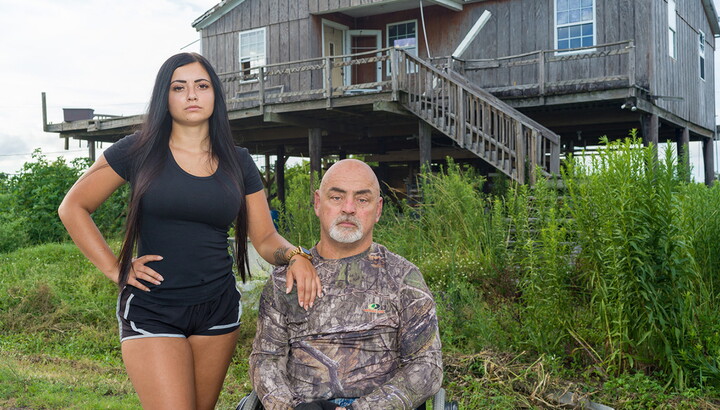
The Carter’s traveling exhibition, Accommodating Nature: The Photographs of Frank Gohlke, opens tomorrow at its third venue, the Center for Creative Photography in Tucson, Arizona. If you’re not familiar with the CCP, it’s a large photography research center that is part of the University of Arizona. CCP holds the archives of around 50 major photographers, including Ansel Adams and Edward Weston. The exhibition will be in Tucson until early November, after which it will travel to its fourth and final venue, the Smithsonian American Art Museum in Washington DC.
Labor Day
If you are like me, you probably never thought about the history behind Labor Day—you were just really grateful for the long weekend. Today, I thought about it for the first time and Googled “Labor Day”, and here is what I found on the Department of Labor’s Web site:
Labor Day, the first Monday in September, is a creation of the labor movement and is dedicated to the social and economic achievements of American workers. It constitutes a yearly national tribute to the contributions workers have made to the strength, prosperity, and well-being of our country.
Now, I remember studying the labor movement way back in my high school U.S. History class, but can’t remember any details. So I Googled “American labor movement” and found this neat Web site.
As I was reading both of these resources, the works of American photographer Lewis Hine (1874–1940) immediately came to mind. The American worker was one of Hine’s favorite subjects, and he is particularly well known for his heart-wrenching photographs of children at work. In fact, these photographs played a key part in convincing law-makers to establish child labor and safety laws for all workers.
Hine’s The Steamfitter is one of my favorite pieces in the Carter’s collection, and seems like a fitting illustration for my story about discovering the history behind Labor Day.
An In-Depth Look at Nell Dorr
As I look at the photographs of Nell Dorr (1893–1988) that are currently on view in the Carter’s exhibition Nell Dorr: From Everlasting to Everlasting, I cannot help but be reminded of the work of another female American artist–that of Mary Cassatt (1844–1926). Like Cassatt, Dorr is best known for her photographs of families, especially mothers and children, and even though Dorr created her photographs in 1950s America, the poses, clothing, and composition seem more in place with Cassatt’s era. Yet her photographs are very much a product of their time. Join us on Thursday, August 28 at 6 p.m. when the Carter’s Assistant Curator of Photographs Jessica May will reveal these often overlooked connections during her Gallery Talk, Nell Dorr and the Idea of the Family in the 1950s.
Last Week for Marsden Hartley and the West
The Carter’s special exhibition, Marsden Hartley and the West: The Search for an American Modernism will close this Sunday, August 24. If you haven’t already seen it, now is the time to do so. If you have seen it, come see it again before it goes away.
Coming Soon to a Television Near You
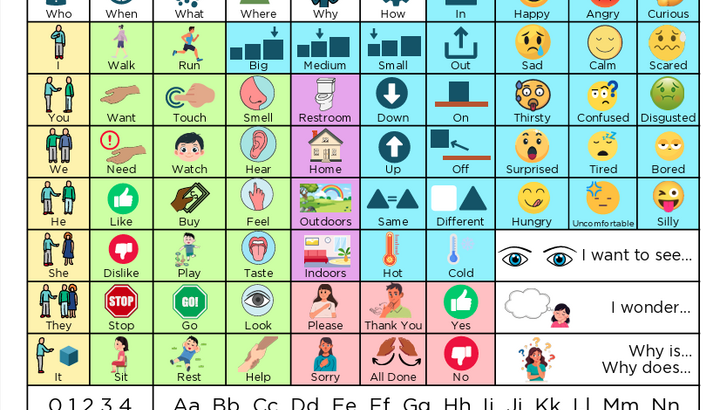
An earlier post introduced our accessible programs, which include Connect to Art, the Carter’s free, multiple-visit program for adults with cognitive disabilities and their caregivers. See this program in action this fall when The Art of Healing Gallery television program on the Veria network features it during an upcoming episode.
Connect to Art creatively connects participants’ daily lives to the Carter’s collection of American art and demonstrates our philosophy that art positively, meaningfully, and memorably impacts lives—a major tenet of The Art of Healing Gallery.
Our thanks to The ARC of Greater Tarrant County for allowing their experience to be filmed and the producer and film crew at the AMS Production Group for helping the Education Department’s first TV shoot go off without a hitch. See a sneak peek of Gallery Teacher Erin Whitmore in action below and check the blog regularly to learn when the program will air.

Parting Words from Intern Jen Padgett
It has been my pleasure to work as an intern this summer at the Amon Carter, and like Kristina and Heather have both written, the experience has presented me with a wealth of great opportunities. I feel that I not only gained knowledge about the Carter and its delightful collection, but also saw how educational programs can really bring out the best of both of these.
The Education department is valuable because it makes connections – allowing people to not only see the art but become involved with it. During this summer I helped out with the Storytime program, which connects children with art, books, and hands-on creative projects. I loved working with the kids because their reactions to art were so enthusiastic. Every week I enjoyed seeing how many families would return again, inviting their friends to come along with them. (I was surprised that this often included friends from out-of-town! I think the farthest travelers were from New York.)
During my time I also helped with the reorganization of our Teaching Resource Center, an extensive collection of materials for all teachers. It’s great to see that something I helped with will be used to help kids learn about art. Hopefully it will spark their love of art in unique ways.
I am so thankful to the staff of the Education department, who makes this all possible. Everyone here works together, collaborating on projects or just sharing opinions. This collective effort results in programs that educate (and entertain!) and I consider myself lucky to be a part of it, if only for a short time.
In just a week, I will be heading back to the University of Notre Dame to finish my senior year. I’m majoring in Art History and English, and while my post-graduation plans are still a mystery, I know that my experience here will be incredibly valuable to me in the future. I’ve grown attached to the Carter and will keep this time dear in my memory. Thank you to everyone who made this summer so special!
Parting Words from Target Family Fun Day Intern Kristina Hilliard
I had completed my master’s degree in art history and had just begun working towards my doctorate in art education when I began my internship at the Amon Carter Museum in the education department. I decided to intern at the Carter because I had always enjoyed the museum’s collection and had heard so many good things about the educational programming there. My internship began with conducting gallery surveys, writing instructional resources, assisting the department with clerical/research tasks, and planning family days. I soon became the Target Family Fun Day Intern wherein I have planned and implemented monthly Family Fun Days for the community. I have had a blast working with everyone here and I have also learned a great deal from this experience. I have learned how to design, construct, and implement fun, educational programming that engages the entire community with the works of art in the museum.
-Kristina Hilliard
Focus on Photographs: Generations
Come by and check out our new small exhibition, Focus on Photographs: Generations, which draws heavily from the Carter’s archives of Karl Struss, Laura Gilpin, and Carlotta Corpron as well as recent photography acquisitions. The works are all from the first half of the 20th century, and illustrate two very different directions in photography of the period. Here are some of my favorites:

Karl Struss, Housetops, Winter, 1915

Carlotta Corpron, Light Follows Form, 1946

Ida Lansky, Etude, ca. 1957-1959 (New acquisition!)
Focus on Photographs: Generations is up until February 2009.
A Few Final Words from Summer Intern Heather White
As an education intern, I used the Barnhart Dictionary of Etymology to develop one of my major projects. While flipping through, I noticed that the word intern is derived from the French interner, which means to confine within a place, be internal. My internship with the Carter has been anything but confining rather my immersion throughout the summer has provided many discoveries about the internal workings of the education department of the museum.
You’d be surprised how much work goes on behind the scenes to provide resources and programming for audiences of all ages. These education folks are passionate and productive! I spent my time here working to develop two self-guides (a brochure that helps you lead yourself on a tour) and a packet based on the summer program, Storytime. The Carter has a reputation for quality educational programming. I feel that working with them to develop these resources has greatly improved the quality of my own writing and has taught me about the needs of the different audiences that the museum serves.
The research that I’ve done to find good “meaty facts” about artworks has been enthralling. The more time I spend with the Carter collection, the more I grow to love American art and artists. For me many of the artworks here are nostalgic; they pull at my heartstrings and take me back to my roots. Thanks Julian Onderdonk, now I may never leave Texas.
As summer ends, it’s back to the University of North Texas in Denton to continue studying as a master’s student of Art Education and Art History. Although I won’t miss the hour commute in the 105 degree Texas heat, I will miss the museum: the collection, the educational opportunities, and the friends that I’ve made.
Thank you to all of the staff of the education department for your teaching and your hospitality and thank you to N. C. Wyeth (a Carter artist I’ve gotten to know through research) for reminding me that, “Now is the season to dream of one’s hopes, to build those castles high in the clear brittle air – and then, to jump for them.”
Summer Reading Series Week 3
This week we travel from the early part of the nineteenth century right up to twenty-first century topics.
What Hath God Wrought: The Transformation of America, 1815-1848 by Daniel Walker Howe is the sixth volume in the Oxford History of the United States.
This is one of those books you can’t read while lying in bed because it weighs so much, but if you love history it’s a great read. This is the story of a country on the move. Changes in transportation and technology encourage shifts in population as well as the spread of information. Howe identifies trends and movements that still shape our country today; the power of religion was used to shape American attitudes during this period, just as it does today.
Picturing a Different West: Vision, Illustration, and the Tradition of Cather and Austin by Janis P. Stout. Texas Tech University Press: Lubbock, TX, 2007.
This book looks at the West at the beginning of the twentieth century. This is a West that the author calls “ungendered.” The opportunities for women artists and writers were greatly expanded in this wide-open space. Two women in particular, authors Willa Cather and Mary Austin, would see the West not as a “rootin’ tootin” raucous place open only to men, but a place of creative freedom for both genders.
Everything is Miscellaneous: The Power of the New Digital Disorder by David Weinberger. Times Books: NY, 2007.
In this book you will find the convergence of many ideas, but I like to think that it just takes us into a new frontier – much like Howe and Stout did in their descriptions of the West. Gone are the days of “one place, one thing.” Human beings in the twenty-first century are used to multiple uses and places for any one thing whether it’s a picture or a TV show or a movie. That makes everything “miscellaneous.”